Health & Wellness
I've Treated Breathing for 30 Years—Here's Why I Refused to Let My Father Give Up His Home
Today, at 84, my father climbs his own stairs without stopping for breath—here's what a 91-year-old woman in the Himalayas taught me about why we run out of breath as we age, and how to win it back.

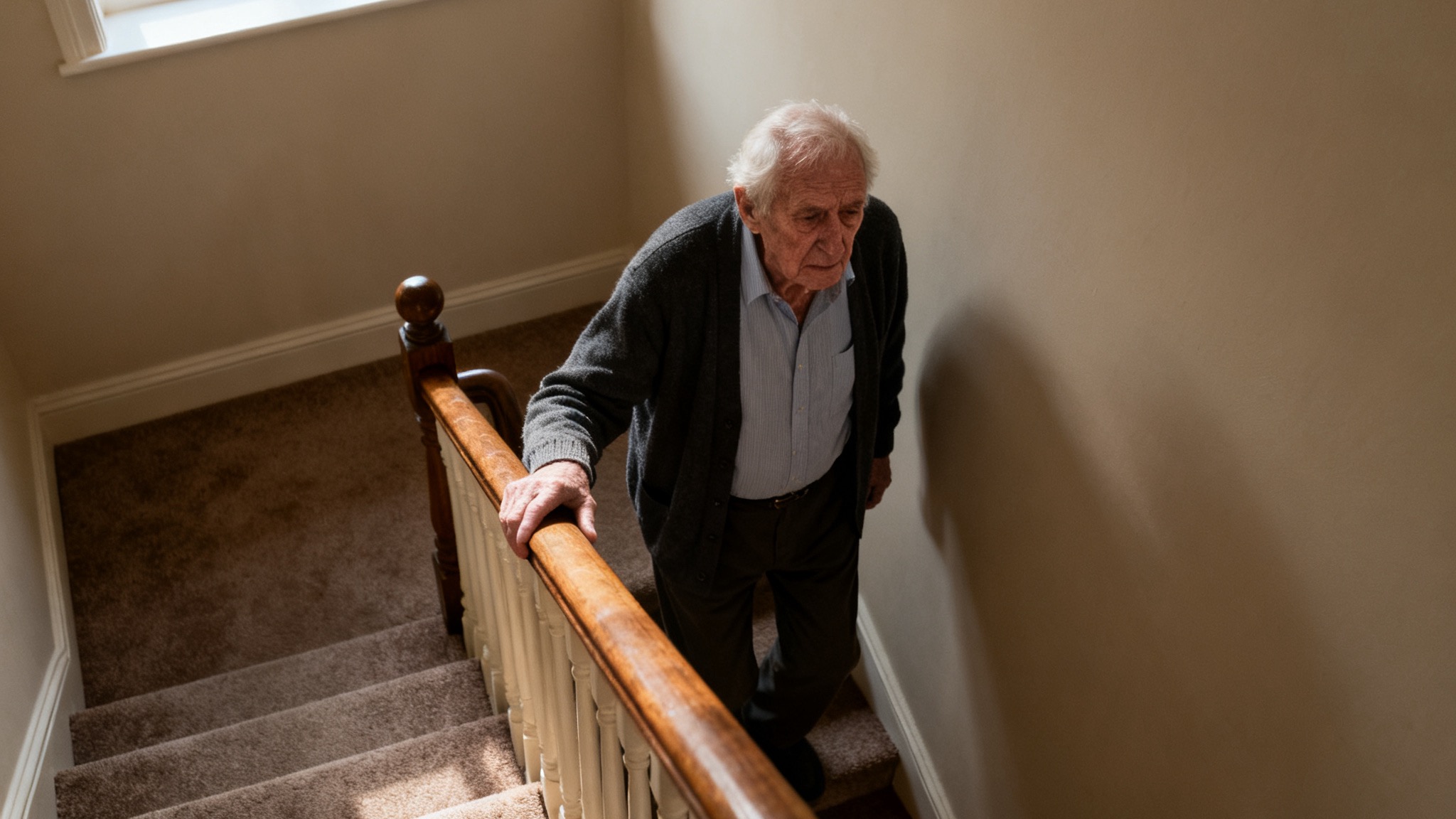
Every week, I tell families their mom or dad is "just getting a bit breathless with age."
Every week, I watch them accept it as the beginning of the end.
But when it was my own father's turn, I refused.
Because after thirty years working on the breathing of older adults, I'd learned what actually steals a person's independence — and, more importantly, what brings it back.
The pattern is always the same: the pause halfway up the stairs, the hand on the banister, the sentence that has to stop for air — then the quiet slide into full-time care.
"It's just age," my colleagues tell families. I've said it myself hundreds of times.
But then I watched my own dad, George, stop halfway up his own staircase…
The man who walked twelve miles a day for forty years as a mailman now stood frozen on the fourth step, one hand white-knuckled on the rail, chest heaving, trying to laugh it off.
"Just getting old, love," he whispered. "Give me a minute. I've got it."
The brochures for a one-story place were already on my sister's countertop.
As a respiratory physical therapist in my sixties myself, I understood the fear of not being able to catch your own breath better than I wanted to admit…
But watching my father go quiet, I realized I'd spent a career in a system that accepts decline instead of fighting it.
Yet high in the mountains of Nepal, I'd read, men and women in their nineties still climb steep paths — at heights that leave visitors gasping — without stopping for breath.
The journals pointed to diet. To good genes. To hard mountain living.
But something about that explanation felt incomplete.
The Discovery That Changed Everything

With my father's independence at stake, I secured a small research grant and flew to the Khumbu — the high Sherpa country of Nepal, in the shadow of Everest.
For days I followed the same disappointing trail of diet and good genes. The guides all repeated the standard wisdom.
But none of it explained why these elders climbed so easily, while ours grow frightened of a single flight of stairs.
Then I saw what they had that we don't — and it wasn't only the air.
Yes, the air is thin. More than two miles above the sea, every breath holds far less than we are used to; visitors gasp just walking from the lodge to the well. Live up here, and your breathing muscles never get a day off.
But in a stone house above the cloud line, it was something in the old woman's hands that stopped me.
Her name was Dolma. Through my translator, I learned she was 91. And each morning, before her tea, she sat by the window and breathed — slow and deliberate — through a small, worn tube of carved juniper wood, no longer than your hand, narrowed to a tight little bore at one end.
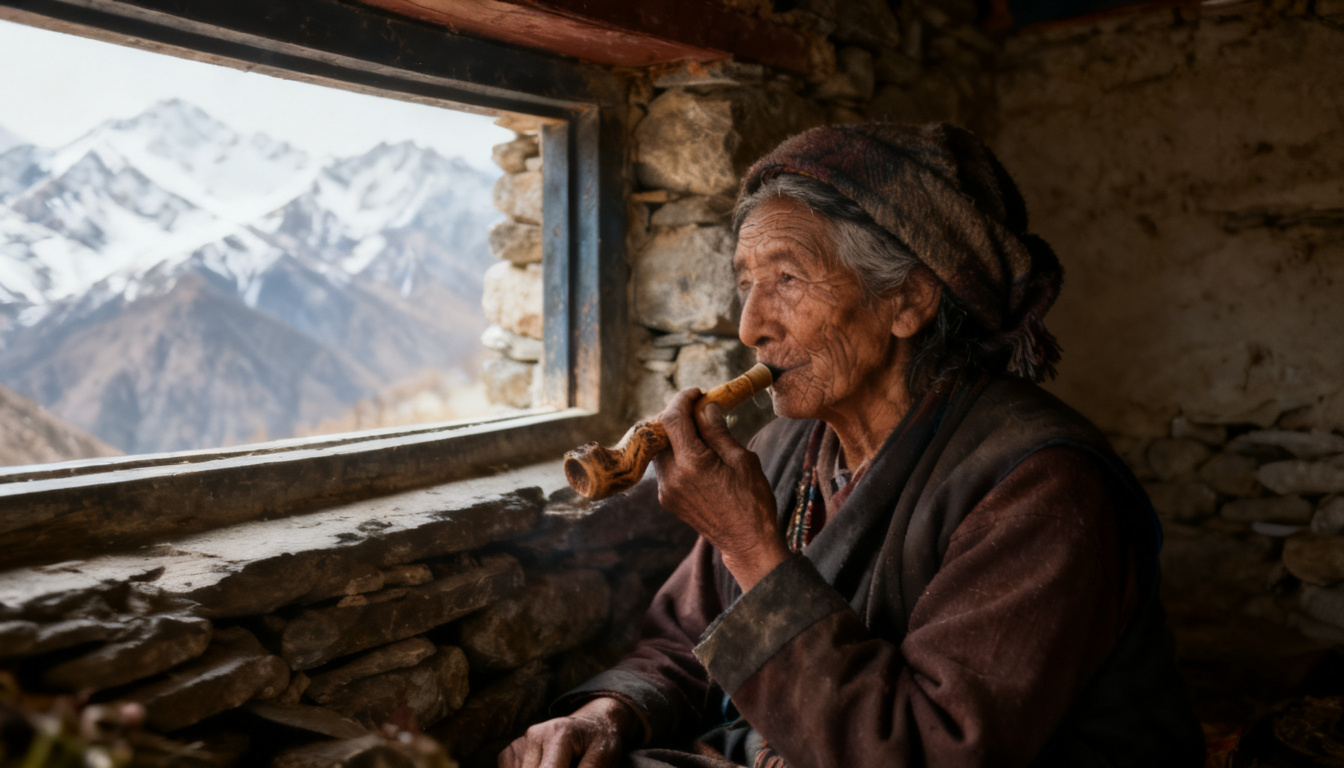
"My mother gave me this," she said, turning the smooth old wood in her fingers. "I have breathed through it since I was a girl. You pull the air through — so." She drew a long, slow breath, and her ribs lifted like a much younger woman's.
The narrowed bore made the air fight to come. It was, in everything but name, a breathing weight — and she had been lifting it every morning for eighty years.
"Has she always been this strong in the chest?" I asked.
The village health worker smiled. "All of them are. The old ones have pulled their breath through these since they were children — first the thin air, then the wood. Their breath stays strong into their nineties. We rarely see the breathlessness you describe."
The next day, I asked Dolma about the little wooden tube.
"Thin air, strong breath," she said, patting the wood. "But the wood keeps it."
As a physical therapist, I knew the truth in it. You don't breathe with your lungs alone — you breathe with muscles: the broad dome of the diaphragm beneath your ribs, and the muscles between the ribs. The thin air keeps them working; the narrowed tube makes them work harder still, on purpose, a few minutes every morning. It was resistance training for the breath — generations before anyone thought to give it a name.
I'd always treated weak breathing as something you simply lose with age — not something you can deliberately rebuild.
What if it was both? What if idle breathing muscles weren't just a symptom of age — but a direct cause of the decline?
I thought of my father at sea level, sunk in his armchair — no mountain, and no worn little tube either.
Dolma's tube worked; she was living proof. So I asked her where I could buy one for my dad.
She only smiled. The old man who carved them, two valleys over the pass, had died years before. Hers had been her mother's, and she would not part with it — and I didn't blame her.
If my father was going to have one, I would have to make it myself.
And that turned out to be the blessing. The old tube had a single, fixed stiffness — far too hard for my father's worn-out breathing, with no way to start gentle. And it only ever worked one half of the breath: the pull of drawing air in.
But thirty years in respiratory rehab had taught me something the old tube never knew. A breath is a full cycle. There are muscles that draw the air in — and separate muscles that push it back out. After years in a chair, both go quiet. Yet almost every breathing gadget ever made only trains the in-breath, and leaves the other half to waste.
So I built something better — and built it to train both. Two dials: one for the breath in, one for the breath out, each adjustable on its own. My father could start as gently as he needed on each, and climb only as he grew stronger — sitting safely in his own chair, a few minutes a day.
That question transformed me overnight — from physical therapist to reluctant inventor.
That's When I Created VitalBreath
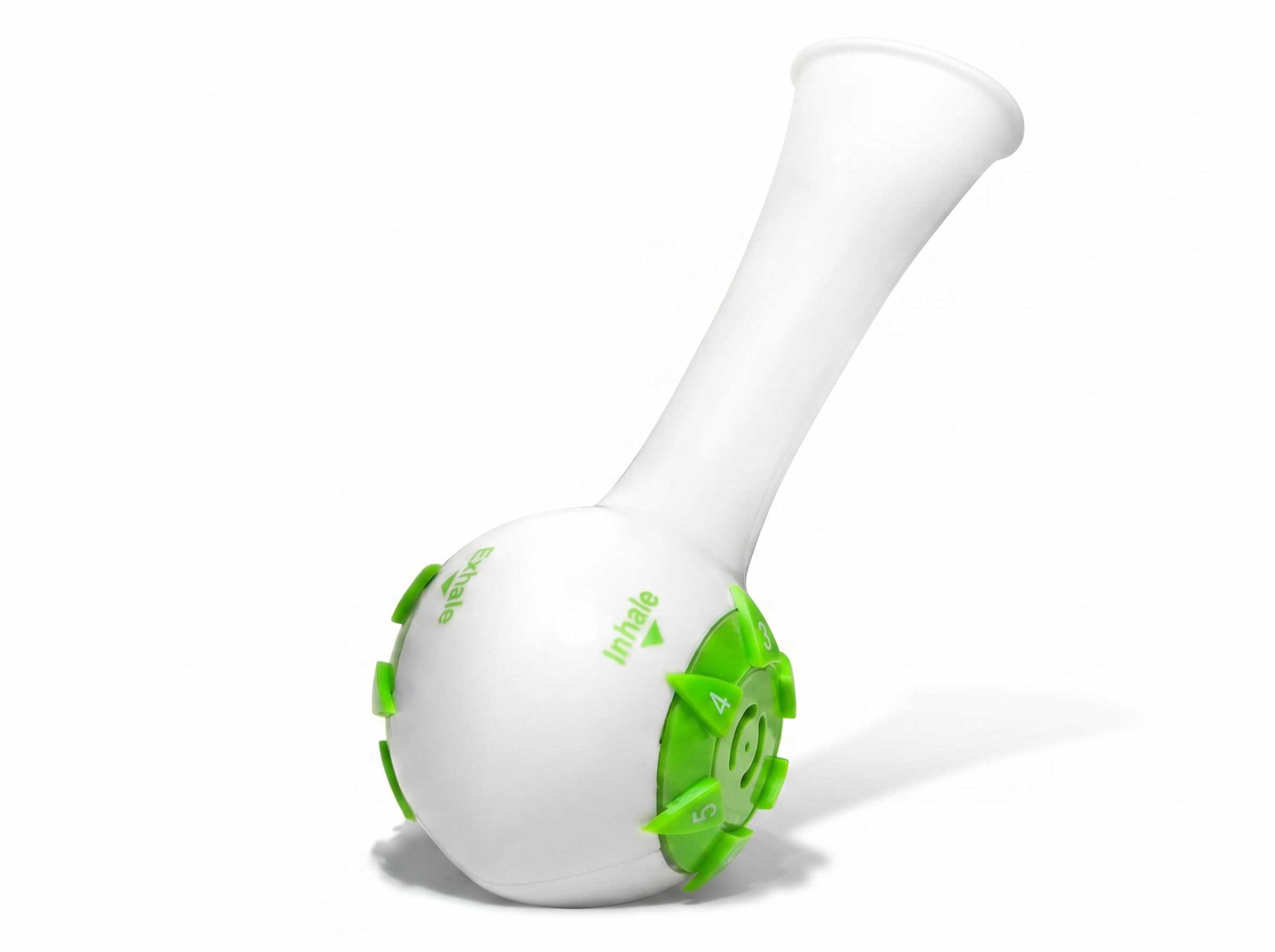
It's small enough to sit in your hand, and gentle enough to use during the evening news. A clean mouthpiece where Dolma's tube was bare juniper wood, valves machined to glide smoothly — and the thing her mother's tube never had: a pair of dials.
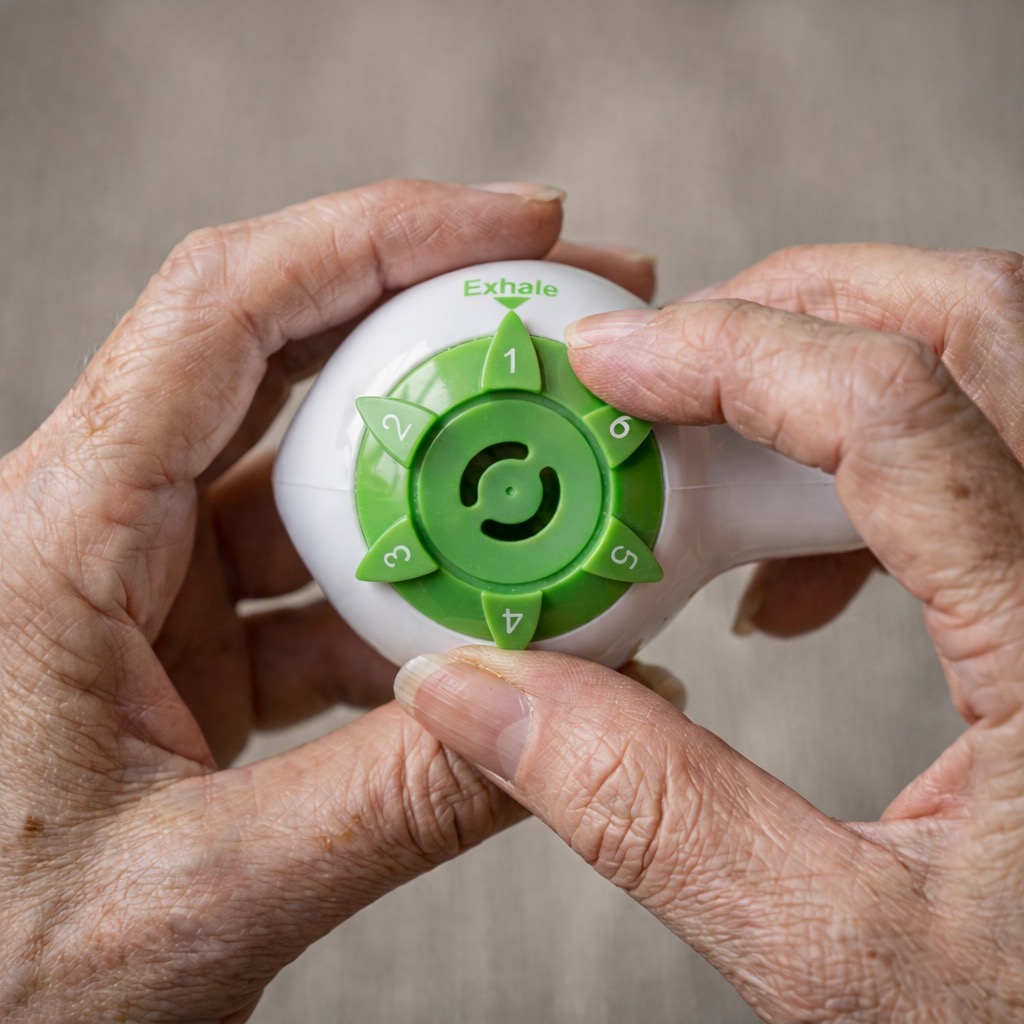
You breathe in and out through it, and it works the air both ways — there's one dial for the breath you draw in, and a second for the breath you push out, each with six levels of resistance. Turn them up, and you've "climbed higher." Most trainers only fight the in-breath; this one trains the whole breath, both ways.
Then my father tried it.
He breathed in, then out, and the muscles that had gone quiet had no choice but to work — the diaphragm, the muscles across the ribs — firing again, in the exact way nature intended, but seated, supported, with no strain on the rest of him.
A turn of each dial sets the resistance — the in-breath on one, the out-breath on the other, set separately — from the gentlest setting, light enough for the weakest breath, all the way up to level six. You start exactly where you are, and climb only as you get stronger.
The routine couldn't be simpler: a few minutes of breathing, morning and night. You count the slow, controlled breaths you can draw at your level — and when they come easily, you nudge the dials up a notch.
And to measure his progress, I didn't need an app or a screen. The numbers were built into the device: the breaths he could manage, and the settings on the two dials.
I didn't realize then that the number on that dial would become the most-watched figure in my father's life.
My Father's Journey Back
The first day, on level one — the gentlest setting — he managed just five breaths before he had to stop.
"Five," he said. "That's humbling, for a man who walked twelve miles a day." "That's your baseline," I told him. "Tomorrow will be better."
And it was. A few minutes morning and night, a breath or two more each day — within two weeks he was running through thirty at level one, so I told him to turn both dials up to two.
From there the number climbed on its own. Level two, and he walked to the gate without stopping for a breather. Level three, and my sister rang to say he was finishing his sentences again. Level four, and I found him at the top of the stairs hunting for his glasses, not even winded.
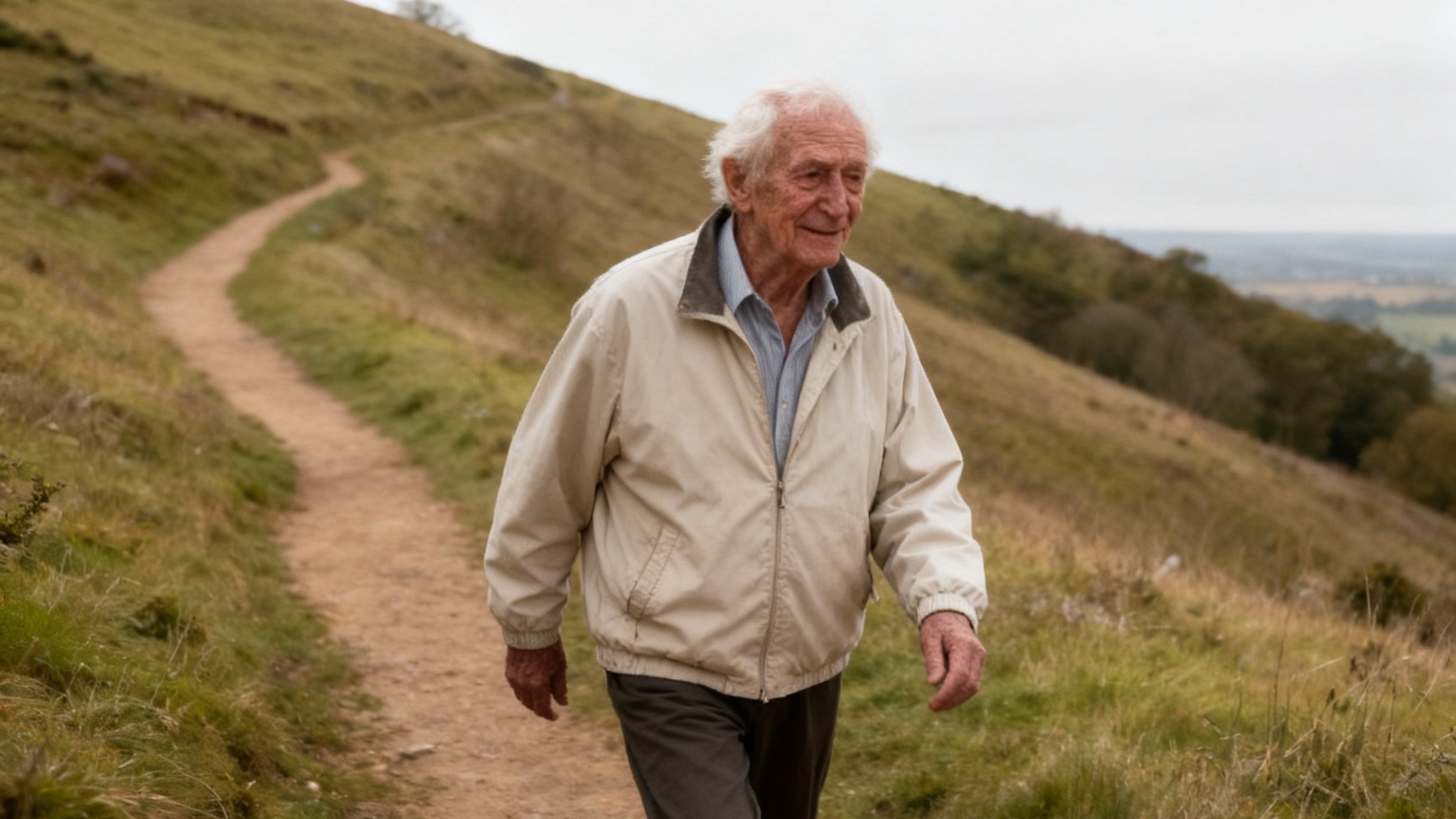
By week six I couldn't find him at the house. My sister pointed up the road, tears in her eyes — he'd walked to the corner store and back on his own, up the hill, and only realized at the front door he hadn't stopped once.
Breathing easy on level five. From a man who, six weeks earlier, could manage five breaths on the gentlest setting there is.
Later, my sister called. "I threw out those brochures," she said. The conversation we'd dreaded for months was over before it began.
The Science Behind the Magic
Look, I could bury you in journals and diagrams. But here's what you actually need to know:
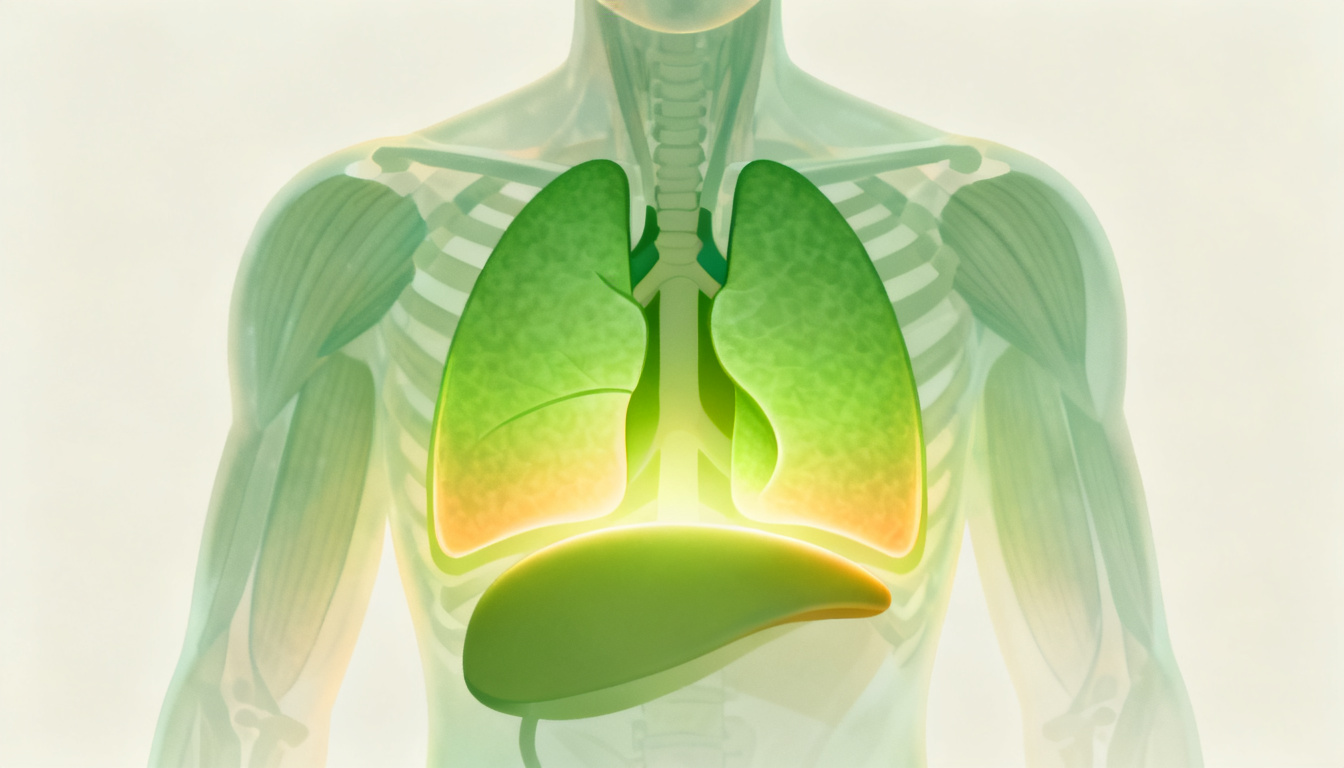
You don't breathe with your lungs. You breathe with muscles.
Chiefly the diaphragm — the broad dome beneath your lungs — and the muscles between your ribs. Every breath you have ever taken, those muscles did the work.
And muscles are muscles. Use them, they stay strong. Sit still for years, breathing shallow in a warm chair, and they fade — exactly like the legs of someone who stops walking. Doctors even have a name for it now: respiratory sarcopenia — the quiet wasting of the muscles that move your breath.
Ordinary life won't wake them. A gentle stroll, puttering around the kitchen — you coast along on shallow breathing that never asks those muscles for much.
VitalBreath is different. Every resisted breath — in and out — loads that whole network at once: the diaphragm and the muscles across the ribs, directly, through their full range.
And because the muscles that pull air in are not the same as the ones that push it out, VitalBreath gives you a dial for each — so you can train the in-breath and the out-breath separately, each to the exact level it needs. The half that's weaker gets the work it's been missing.
That deliberate loading is what tells your body to wake those muscles back up. To recruit them. To trust them again.
You're not just "doing breathing exercises." You're rebuilding the engine that carries you up the stairs.
It's the same logic the research keeps pointing to. Researchers who followed over three and a half thousand older adults found that how much air a person could push out was one of the clearest signs of how the years ahead would go (Cook and colleagues, American Journal of Epidemiology). More recently, doctors showed that people whose breathing muscles had wasted were several times more likely to decline (the Otassha Study, 2023). In plain terms, your breath is a vital sign — like blood pressure. Except almost nobody checks it, and almost nobody knows you can train it back up.
The Ripple Effect
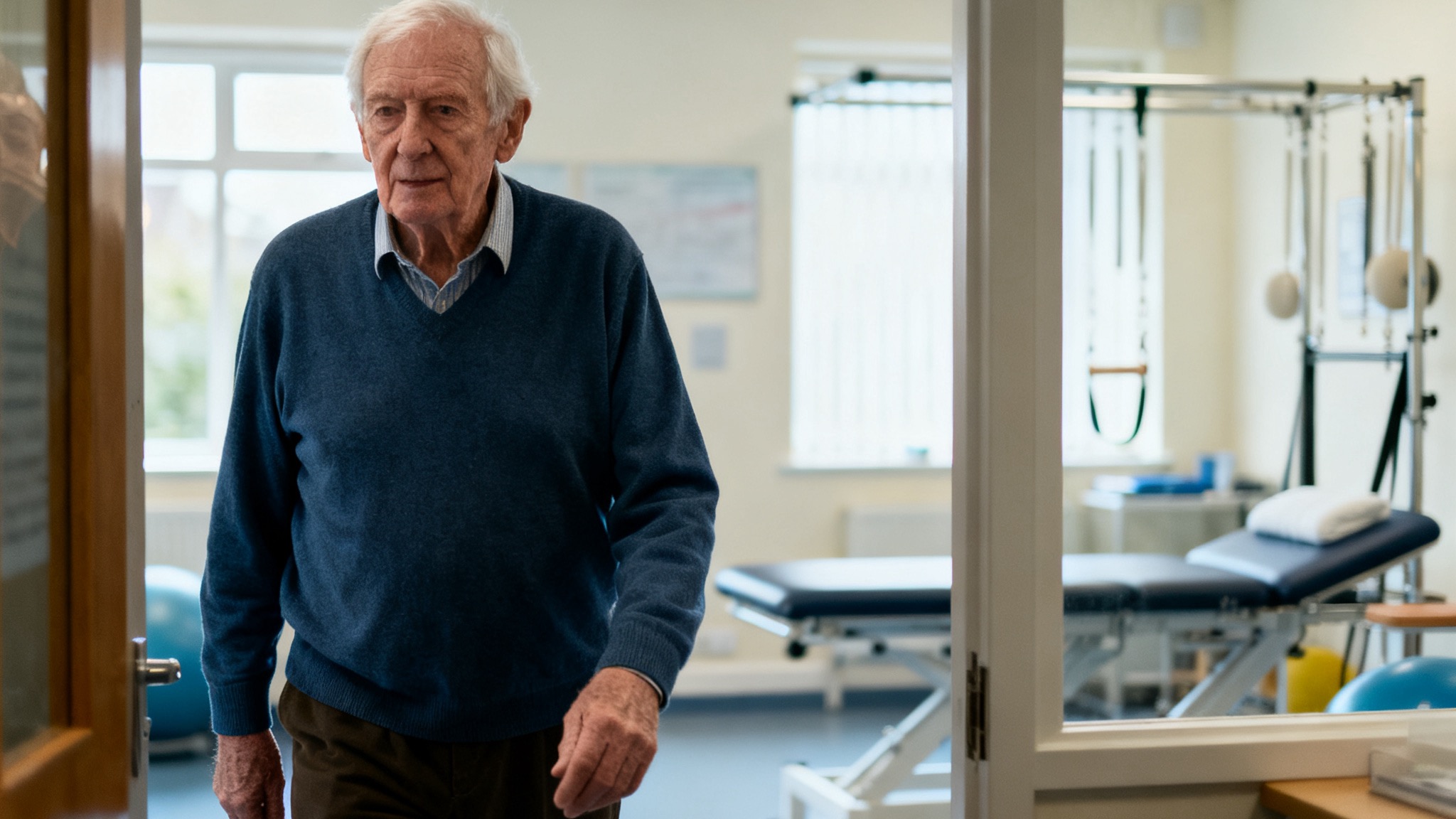
Word spreads fast in a small practice — especially when your 84-year-old father walks in without stopping to catch his breath, after a year of pausing on every staircase.
I started lending out our spare prototypes. What happened next convinced me this wasn't just luck:
Brian Ellison, 79, retired schoolteacher: "I used to dread the stairs. I'd get to the top, sit down on the landing, heart going, and not be able to say a word for a minute. My daughter started talking about a one-story place.
Three weeks doing my few minutes a day, and I came up those stairs talking. She heard it down the phone and went quiet. She hasn't mentioned the one-story place since."
Geoffrey Pratt, 81, retired church organizt: "When every walk leaves you puffing, you just stop going out. And when you stop, everything gets worse. I'd given up the choir because I couldn't get through a line.
Six weeks with this, and last Sunday I sang the whole first verse without gasping. I'm on level four. I'd not felt that in years."
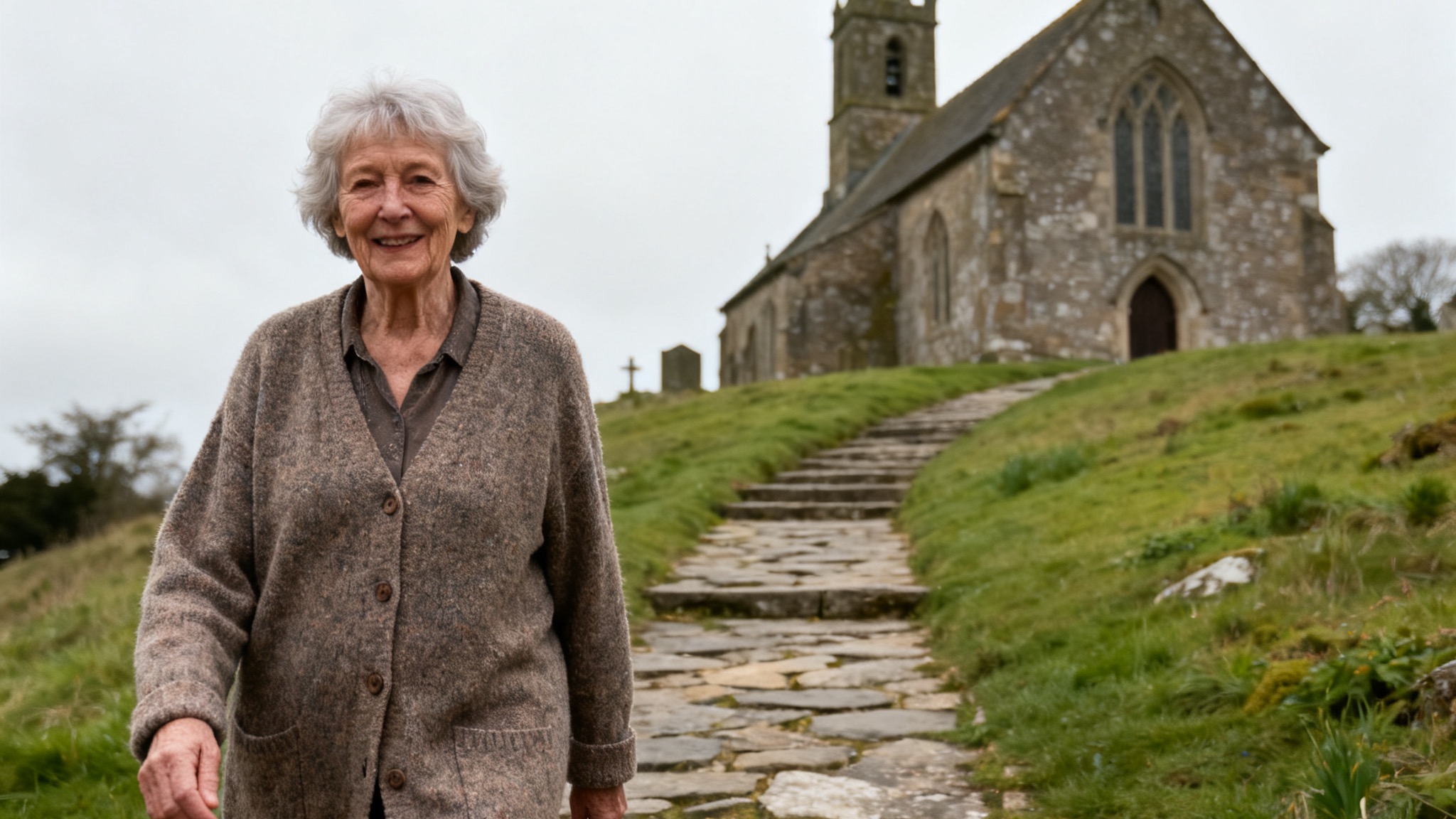
Pauline Carter, 74, grandmother of five: "I'd stopped going to church — couldn't manage the hill without stopping twice, hand on the wall, hoping no one saw. My son took me for one of those careful lunches. 'Maybe that hill's getting to be a bit much, Mom.'
I felt silly at first, puffing away during Wheel of Fortune. But two months on, I walked up that hill and only realized at the door that I hadn't stopped at all. My son hasn't mentioned moving since."
The Production Challenge
Here's the part I hate writing.
Because of the surge in demand, our greatest challenge isn't selling VitalBreath — it's making them properly.
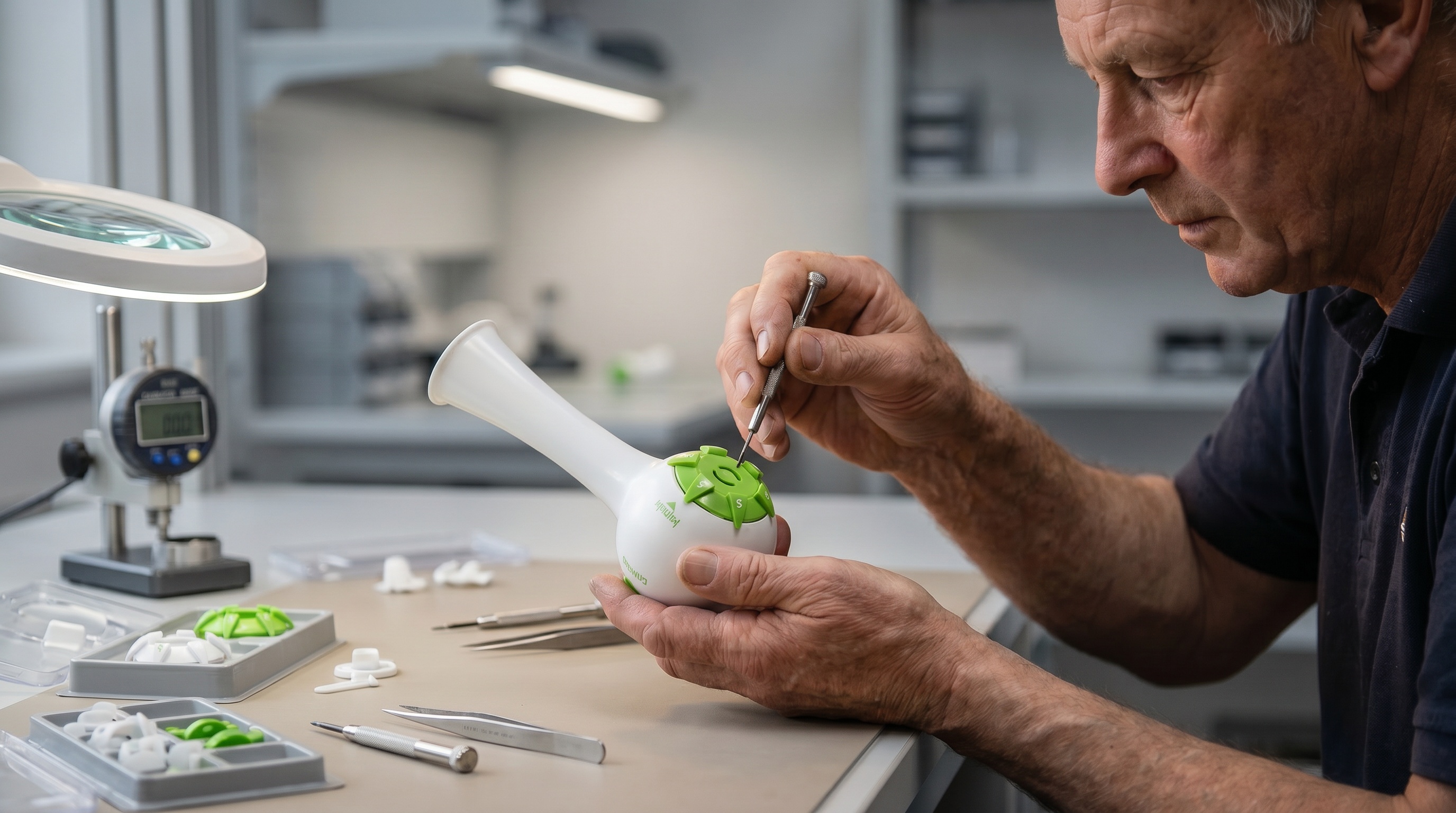
The whole thing lives or dies on one component: the resistance valve. It has to load the breath smoothly from the gentlest setting to the firmest, feel identical breath after breath, and hold that calibration over thousands of uses.
So every single unit is set and tested by hand by Eddie, a toolmaker who spent forty years building precision instruments before he retired. He can only finish around three hundred a week.
A larger factory offered to mass-produce them with cheaper valves. Their sample batch felt rough out of the box and drifted within weeks. For me, sending a sloppy unit to an older person rebuilding their breath is unthinkable — the resistance has to be honest, or the muscles never get the message.
One more thing Eddie is strict about: every device has its own mouthpiece, and it isn't for sharing. If two of you want to train, you each need your own.
My "Prove Me Wrong" Guarantee

I know you're skeptical. In a world of miracle cures and empty promises, you should be.
The price for a VitalBreath is $25.99.
But I want you to think of it as a fully refundable deposit.
Here is my personal promise:
Get a VitalBreath. Use it for just a few minutes a day. Watch the number on the dial climb, week by week.
If, within 90 days, you're not breathing easier on the stairs…
If you don't feel steadier on the walk to the store…
Or even if you just don't like the way it feels…
Simply send us an email. We will refund every single penny. No questions asked. You don't even have to send the device back — pass it to a friend or neighbor who might benefit.
Why would I make such an offer? Because the return rate is less than 1%. It works. And once you feel your breath come back, you won't dream of sending it back.
One gentle word of caution: start on the lowest setting, and build up slowly. If you have a heart or lung condition, have a quick word with your doctor before you begin. This is strength training for your breathing muscles — treat it like any new exercise.
Because the mouthpiece is yours alone, most families get one each — one for you, one for the person you worry about.
The Bottom Line

I think about Dolma often. 91 years old, still drawing her breath through that worn juniper tube each morning before her tea — still climbing to her field in air that leaves the rest of us gasping.
All because of a simple practice her people have kept for centuries: never let your breath go idle.
You might be reading this with a chest that isn't quite what it used to be.
Maybe you've noticed the little betrayals. The pause halfway up the stairs. The sentence that has to stop for air. The way you've started planning your day around how far you'll have to walk.
Or maybe you're watching someone you love stop to catch their breath.
Believing it's inevitable. Natural. Just what happens.
It's not.
The elders of that high mountain country worked out generations ago what we're only now measuring: a strong, independent life is built on the breath. Look after it, and it will look after you.
My father's 84 now. Yesterday he walked to the store and back. This morning he was up those stairs before I'd got my coat off.
But I know this: he won't be giving up his home. Not this year. Not next year. Maybe not ever.
All because his breath never went idle. And neither did the rest of him.
See If VitalBreath Is Still Available >>
About Claire Bennett
Claire Bennett is a Respiratory Physical Therapist with more than 30 years of experience in pulmonary rehabilitation and the breathing health of older adults. A former hospital clinical lead, she has spent her career helping older people breathe easier and stay active and independent in their own homes.
What Customers Say
A nursing home near us costs thousands a month. Got Dad one after reading this article. Within weeks he stopped having to rest halfway up the stairs. Best $26 I ever spent.
- Don C.
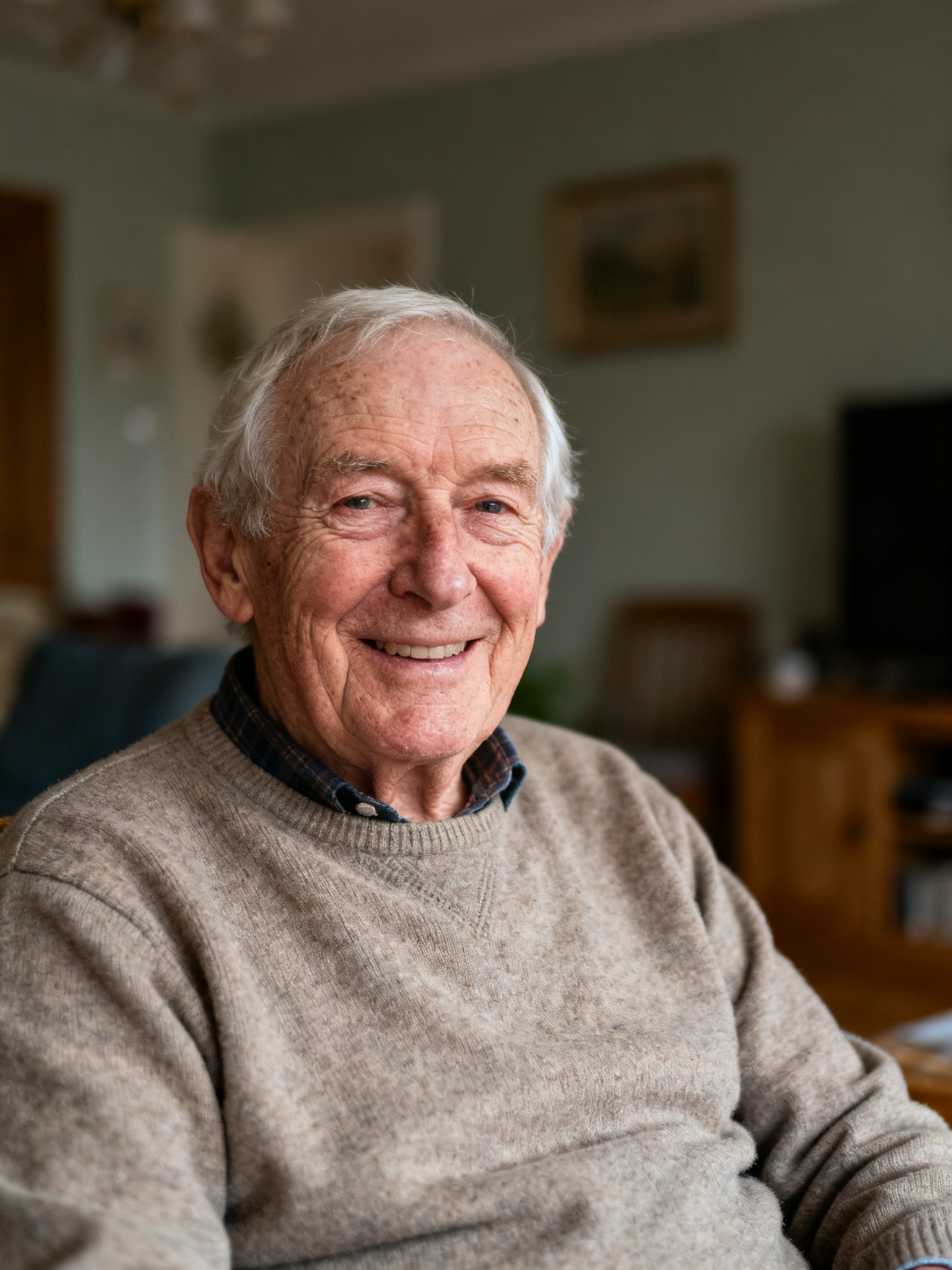
Started on level one, I'm on level four now. My golf buddies noticed I'm not puffing up the fairway. Already ordered one for my wife — you can't share the mouthpiece.
- Benjamin W
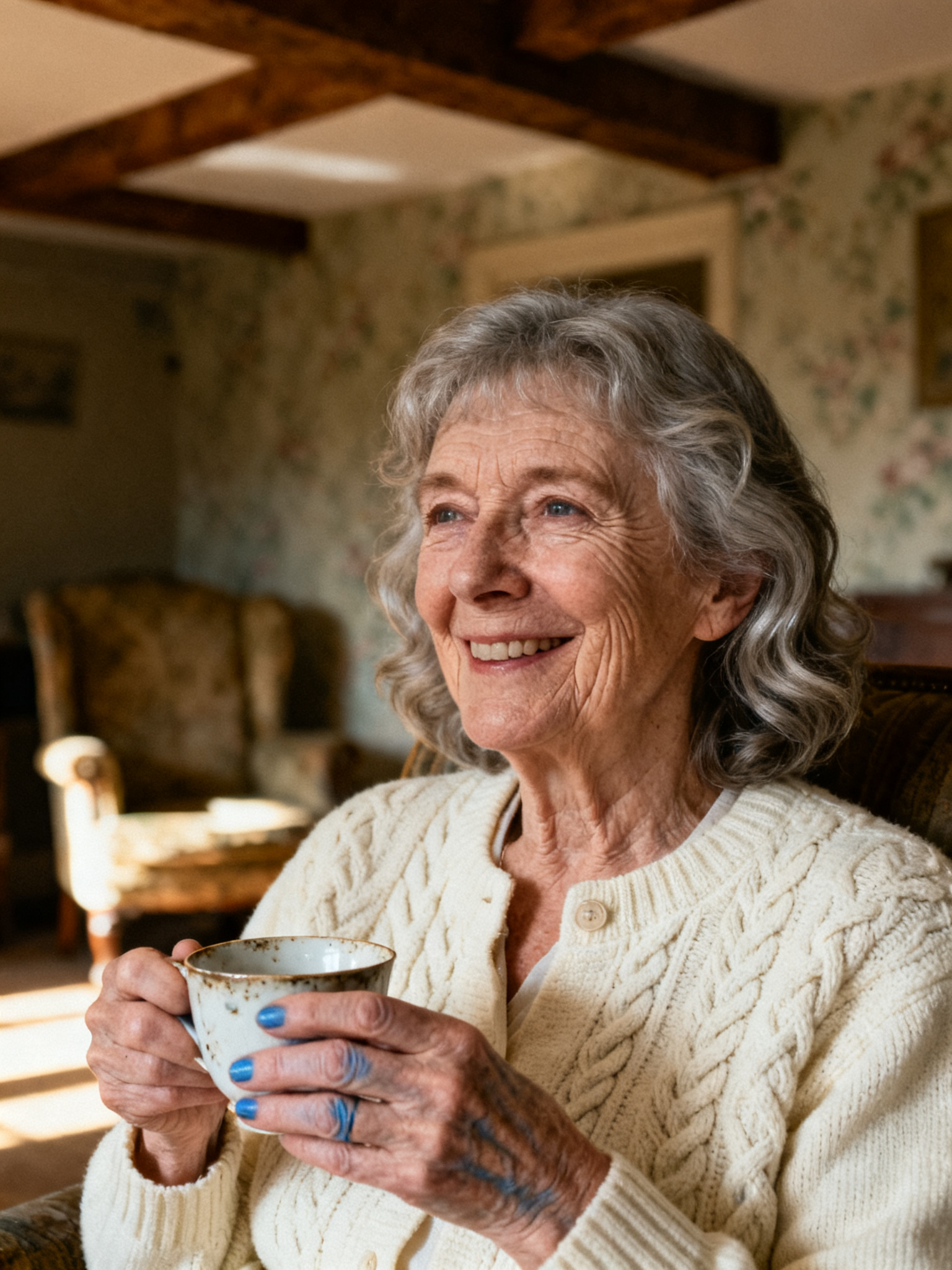
My daughter kept suggesting a nursing home 'just to look.' Three weeks of this and I came up the stairs talking. Take that, nursing home!
- Mary K
Special Pricing Is Limited To Today Only!
Activate a special one-time deal reserved for first-time customers. (As much as 50% OFF)
 Apply Discount & Check Availability